As a member of the Natural Resources Committee and a senator who represents the largest agricultural county in the state, I worked on each of these bills to ensure that both Vermont’s environment, especially our waterways, and farmers are protected.
Vermont Clean Water Initiative Updates. Protecting and improving the water quality in Lake Champlain and all waterways is crucial for the health and vibrancy of Vermont. For nearly 25 years, the State has been required by the federal government to follow a plan to reduce pollution in Lake Champlain, enforced by the federal Environmental Protection Agency (EPA), that establishes a total daily maximum load (TMDL) of phosphorus from wastewater, storm water, and agricultural runoff. For more information, see the Vermont Clean Water Initiative 2024 Performance Report or the Department of Environmental Conservation website. Over the years, these plans and relevant state laws are updated to ensure clear and effective oversight. This session, we made changes to laws regulating both agricultural and storm water management.
- Agriculture Water Quality Oversight (S.124/Act 67) – Last year, the EPA determined that Vermont was not sufficiently regulating discharges from farms with concentrated animal feeding operations (CAFOs), which are essentially the barnyards where large numbers of livestock are fed and housed. The EPA required Vermont to establish a corrective action plan to give the Agency of Natural Resources (ANR) the authority and resources to regulate CAFOs. Act 67 updates Vermont law to better conform with the EPA order and the federal Clean Water Act, ensuring that ANR will inspect, permit, and enforce clean water regulations for CAFOs in Vermont. To facilitate strong communication and ensure that farmers are partners in this transition, Act 67 establishes a stakeholder group to provide feedback on new rules and procedures and make recommendations for further improvements.
- Stormwater Management (H.481/Act 37) – Vermont’s Clean Water Initiative also includes the regulation of stormwater from roads, parking lots, roofs and other impervious surfaces. Residential and commercial stormwater is regulated through the Three-Acre Impervious Surface Permit. This permit requires developed properties to include mechanisms for collecting and treating stormwater so that it doesn’t pollute waterways. Unfortunately, many impacted Vermonters have found it difficult to comply with the stormwater regulations due to their complexity and cost. To respond to this feedback, we passed Act 37 which updates and clarifies some of the requirements, extends the deadlines for compliance, and provides funding for projects, especially those that impact housing. You can find a general summary of Act 37 here, a fiscal summary here, and read how ANR is implementing Act 37 here.
Fish and Wildlife Protection (H.231/Act 47) – This bill updates a number of provisions related to hunting and fishing regulations, including expanding the prohibition of carrying loaded hunting weapons in a vehicle, updating big game violations, and clarifying fishing tournament rules and fees. In addition, Act 47 creates a free fishing license for Vermonters with developmental disabilities, inspired by the testimony of my constituent Raymond Bapp, who is an avid fisherman and has advocated for many years for this to become law. The bill also implements several important wildlife protections, including prohibiting the willful removal of bird nests, clarifying requirements for importing wild animals, and maintaining confidentiality of known sites of threatened and endangered species. The bill also implements the first-ever restrictions against the intentional taking of amphibians and reptiles in Vermont, an important step in protecting these oft overlooked animals. Lastly, it prohibits the sale of pond slider turtles, a popular pet but invasive species in Vermont. You can read a summary of Act 47 here.
Protection from Nuisance Suits for Agriculture (S.45/Act 61) – Act 61 updates what’s known as the Right-to-Farm Act to provide protections from nuisance lawsuits if a farmer is following generally accepted agricultural practice and is in good standing with both the Agency of Agriculture, which regulates most farming practices, and the Agency of Natural Resources, which regulates agriculture water quality. The bill requires that the plaintiff, or the person bringing a lawsuit, will have the burden of proof to show that a farmer is not entitled to these nuisance lawsuit protections and is a nuisance. The bill stipulates that parties must attempt to reconcile disagreements with mediation before bringing a lawsuit. A summary of Act 61 can be found here.
Avian Flu Vaccine Resolution (S.R. 14) – During the session, avian (bird) flu was spreading throughout the country, impacting poultry and dairy animals and farm workers. However, many farmers felt that the federal response was insufficient, especially for small Vermont farms. At the request of local poultry farmers, including the founder of Stonewood Turkey Farm in Orwell, I introduced a bipartisan resolution “strongly urg(ing) the USDA and the CDC to expedite the establishment and implementation of an avian influenza vaccine national reserve and distribution system for small- and medium-sized poultry farms.”
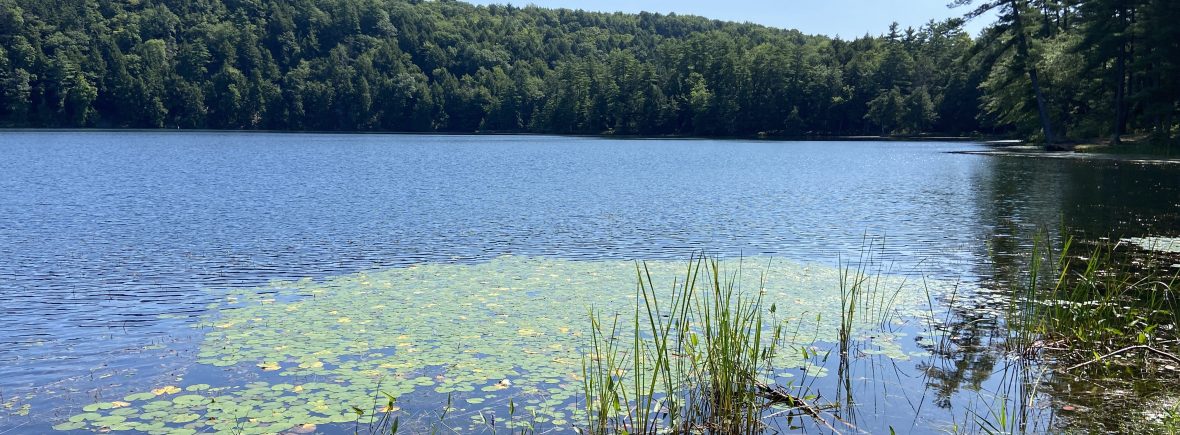
Photo Note: Sunrise Lake in Orwell.
