The cost of living in Vermont, including taxes, has been top-of-mind for many Vermonters, and the Legislature acted to reduce taxes in several ways this session.
Bi-Partisan Income Tax Reduction Package (S.51) – I am the lead sponsor of S.51, a bill that will provide thousands of Vermonters lower taxes, giving tax credits and exemptions to veterans, families, Vermonters without children, military retirees, and senior citizens alike. The bill provides a tax exemption for military retirees earning up to $175,000 and a tax credit for all veterans earning up to $30,000. In addition, it expands the child tax credit for families with kids up to six years old, the earned income tax credit for Vermonters with no children, and the income level for exempting social security payments from state income tax. Read this excellent summary of S.51 from the Joint Fiscal Office for more details.
Originally, the bill would have provided a refundable tax credit for Vermonters who provide unpaid care for family members who are unable to care for themselves due to an illness or disability. The majority of unpaid caregivers are women over aged 55, caring for ailing parents and spouses or adult children with disabilities; even a modest tax credit would help them make ends meet. Unfortunately, the unpaid caregiver tax credit was stripped from the bill in the House, but I will reintroduce it next session after working out more details.
Education Property Taxes. After enormous education property tax increases last year, this year local school boards did an excellent job of keeping school budgets in-check and property tax increases modest. In addition, the Legislature allocated $118 million in one-time funding to lower property taxes even further, so statewide, the average property tax increase will only be 1.1% this year compared to 13.8% last year. See the May 1 Education Fund Outlook table for more of the nitty gritty details. I expressed concerns about using this large amount of one-time funds to buy-down the tax rates, particularly now with looming financial destruction coming from the federal level. We may not have the funds next year to buy down property taxes and therefore could see substantial increases. I advocated for using half of the one-time funds this year and saving the rest for next year, but I did not prevail. Nevertheless, Vermonters will see lower property tax increases for this year at least.
The major education transformation bill, H.454, includes some promising tax provisions that will take effect down the road, including a new property tax exemption and a new property tax classification, which together could reduce property taxes for many Vermonters in future years. Read this Joint Fiscal Office summary for more details about the fiscal impact of H.454 and my piece, “The Good, the Bad, and the Ugly of H.454” for more information in general.
Finally, the Community and Housing Infrastructure Program (CHIP) created in Act 69 was established with the goal of funding local infrastructure to enable housing development. It does so by using the projected increment of education property tax revenue expected through new development and grand list expansion to fund the projects. This tax increment financing model is used in larger communities in Vermont (Burlington, Barre, St. Albans, etc.) to spur full-scale development, but the CHIP project-based model is designed to focus on housing and enable smaller communities to access funding for such development. The requirements for CHIP include various limits and tests to help ensure that the impact on the Education Fund, and therefore both property taxes and funding for schools, is positive not negative. Read this Joint Fiscal Office summary for more information about Act 69.
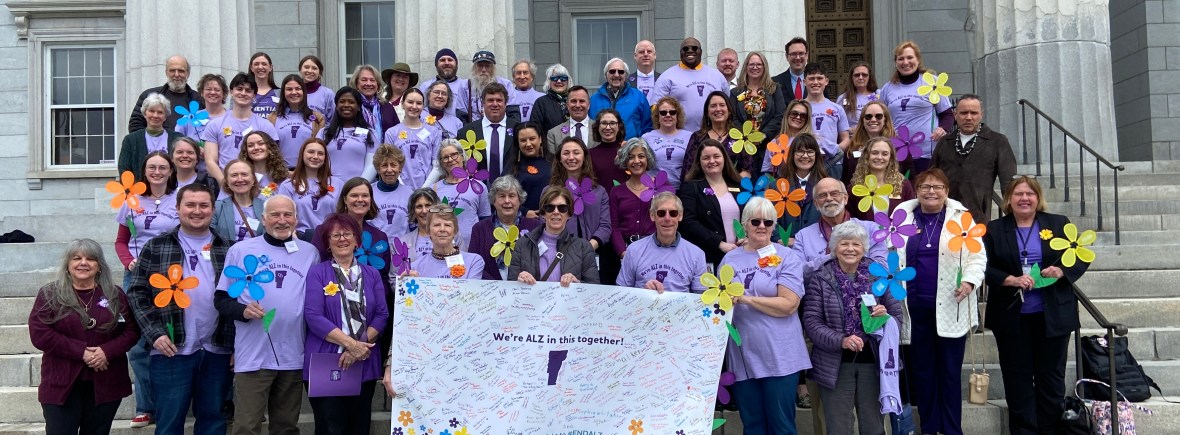
Photo Note: The group of advocates, representing the nearly 13,000 Vermonters diagnosed with Alzheimer’s, who came to the State House on Alzheimer’s Awareness Day to advocate for legislation that would support families impacted by Alzheimer’s, including the unpaid caregiver tax credit originally included in S.51.
